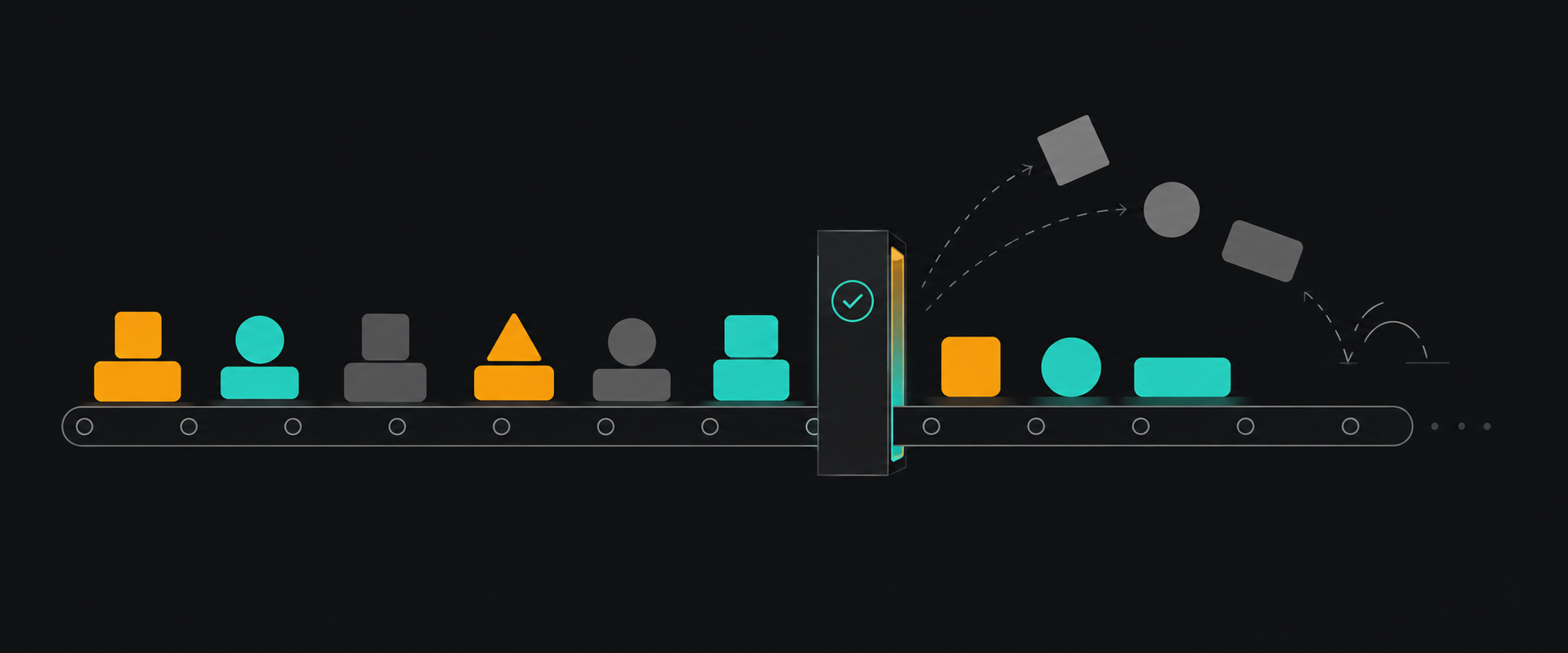
A design system shouldn't just make the right thing easier to build.
It should make the wrong thing harder to ship.
When I first started working deeply with design systems, it was easy to think about them primarily in terms of components, tokens, documentation, and consistency. Those things matter.
But the more systems I've built, the more I think the real value comes from the safeguards you build around them.
Reviewers shouldn't be the safeguard
If someone changes a shared component, we shouldn't have to rely entirely on a reviewer remembering every place that component could break.
The system should help us catch it.
That means things like:
- Visual regression testing catches unintended UI changes.
- Accessibility checks catch issues before they spread across products.
- Component and interaction tests protect expected behavior.
- Tokens constrain design decisions instead of everyone inventing their own values.
- Storybook gives us an isolated environment to understand changes.
- CI makes those checks part of shipping rather than something we hopefully remember to do.
The safeguards, made concrete
Abstract lists are cheap, so here's what each safeguard looks like in practice:
And tokens — the constraint that quietly prevents the most drift:
When the only way to use a color is through a token, "someone hardcoded a hex value in a feature branch" stops being a review catch and becomes a lint failure.
Reuse with confidence
This changes how I think about design systems.
A button isn't valuable just because 20 teams can reuse it. It's valuable because those 20 teams can reuse it with confidence.
And if someone changes that button tomorrow, the system surrounding it should help tell us what we've affected before our users do.
Without safeguards, reuse actually amplifies regressions: a bug in a shared component ships to every consumer at once. The component library concentrates risk. The safeguards are what convert that concentration into leverage.
Encoding decisions, not just UI
That's the part of design systems I find increasingly interesting.
You're not just building a library of reusable UI. You're encoding engineering decisions, constraints, and feedback loops into the way your organization builds software.
A quick self-audit — does your design system:
- Catch visual changes automatically, or rely on eyes on every screen?
- Fail CI when accessibility regresses, or document it as a "known issue"?
- Make off-token styling impossible, or merely discouraged?
- Give contributors an isolated surface (Storybook or equivalent) to understand a change before shipping it?
- Turn repeated review comments into automated checks over time?
The best design system infrastructure becomes almost invisible. Developers just feel like the right path is easier to take — and mistakes are harder to accidentally ship.
That's when a design system starts becoming an engineering system.