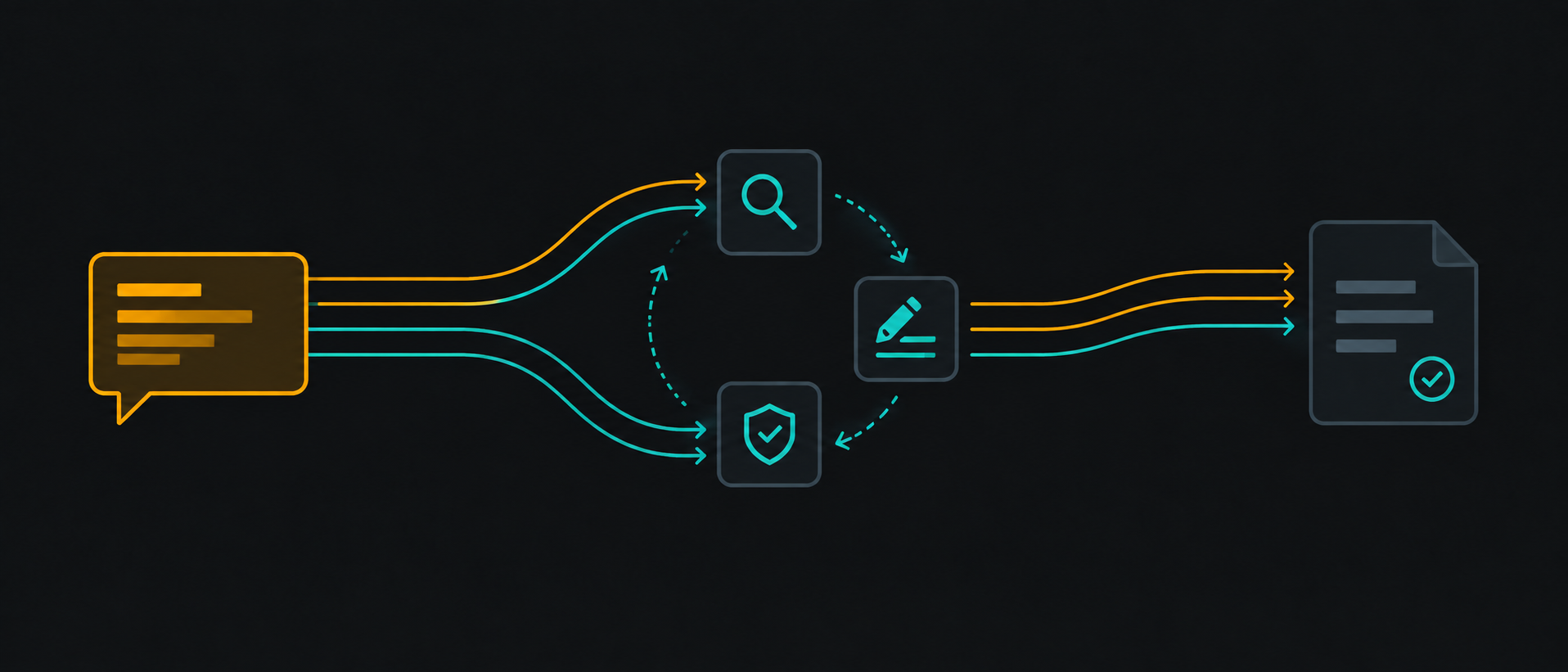
AI becomes useful in code review when it is part of a loop, not a shortcut.
My goal is not to let the model decide whether a PR is good. My goal is to use it to compress the boring parts of review so I can spend more attention on architecture, product intent, and edge cases.
The loop
I use the same sequence most of the time:
- Inspect
- Frame
- Draft
- Reduce
- Verify
- Record
Each step has a narrow job.
Inspect
I start by reading the diff once without prompting the model. I want a human sense of what changed, what is risky, and what is probably noise.
Frame
Then I write a short brief that tells the AI what matters. I include intent, constraints, and what to ignore.
Draft
I ask for risks, not praise. The prompt should surface likely failure modes and ask for file references.
Reduce
I trim the output aggressively. Most AI review notes are either duplicates, too vague, or not worth interrupting the author for.
Verify
This is where the workflow becomes real. I check the change with a local command before I trust the notes:
If the review touched content, I also read the rendered output or run the build path that exercises the route. The point is to confirm that the code and the content agree.
Record
I keep a short note about what the review caught and what it missed. That helps me tune the next prompt instead of repeating the same vague ask.
A prompt that stays honest
I avoid prompts that ask the model to approve the PR. Better prompts ask for concrete risks, missing checks, and places where the diff could mislead a reviewer.
That keeps AI in the right role: a fast second pass that expands attention, not authority.
AI Workflows Code Review