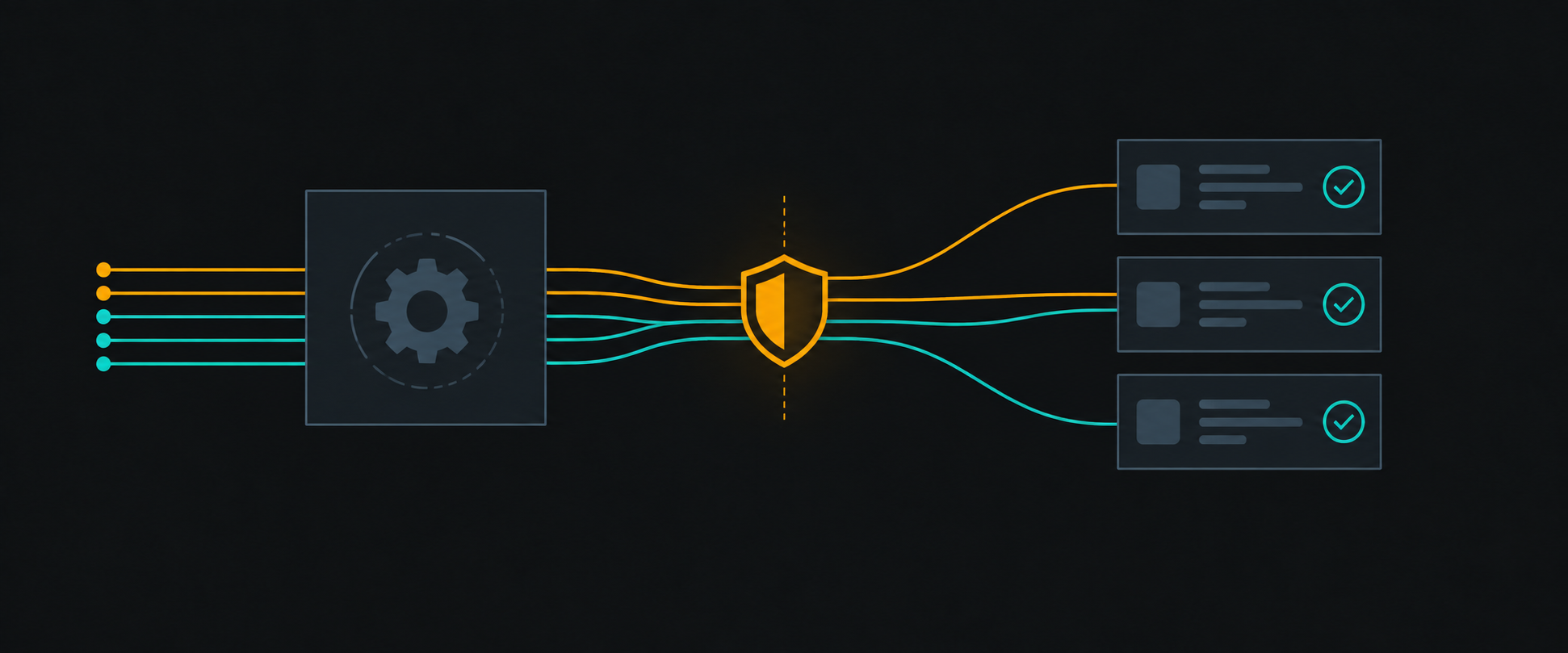
The design system was exemplary: every component in Storybook, every story covered by Chromatic, tokens enforced, accessibility checks green. And three months after its biggest consumer shipped a redesign, a marketing page shipped with a broken responsive layout and a journey-breaking form — none of which any design-system test could see.
The lesson is uncomfortable for platform teams: component-level confidence is incomplete when consuming apps don't test composition.
What Storybook and Chromatic prove — and what they don't
Isolated component tests prove each brick is sound: variants render, props work, contrast passes, baselines match.
They cannot prove anything about walls. They don't know:
- That the consuming app renders
<Button>inside its own 300px sidebar grid, where the label truncates - That a page combines four components in an order the library never anticipated
- That the checkout journey still works end to end
Where the regressions actually showed up
| Regression type | Caught by DS tests? | Caught by app tests? |
|---|---|---|
| Component variant broken | Yes | Yes |
| Component misused in context | No | Yes — page-level visual tests |
| Responsive layout collapse | No | Yes — viewport coverage |
| Critical journey broken (signup, checkout) | No | Yes — E2E |
| Token change ripples unexpectedly | Partially | Yes |
The bottom two rows are where production incidents lived.
The ownership gap
This is organizational as much as technical. The platform team owns the library; the product teams own the apps. When the dashboard breaks at 768px, both teams point at the other's test suite — and the gap between them has no owner.
The fix we landed on:
- Platform team keeps component-level coverage and publishes what it does and doesn't guarantee — in writing, in the DS docs
- App teams own page-level visual regression on their critical routes and the E2E journeys that make them money
- The DS ships a starter config — Playwright viewports, baseline setup, recommended Chromatic project settings — so "we didn't know how" stops being the reason app teams skip it
A layered visual-testing strategy
Layer 4 is the one most organizations miss: when the design system releases, the consuming apps run their suites against the release candidate. That closes the loop — and it's where a token change that ripples unexpectedly gets caught before it ships.
A design system's safeguards protect the library. The apps need their own — and the DS's real job is making those easy to build.